
Upcoming Events
(SCC) Knowledge Series: Know Your Rights Webinar - Virtual (Undocumented Student Success Month)
from 2:00 to 3:00 p.m.
On-Campus Support Programs and Services
Hawk CARES Center
Hawk CARES serves the basic needs of our students, ranging from food insecurity to homelessness.
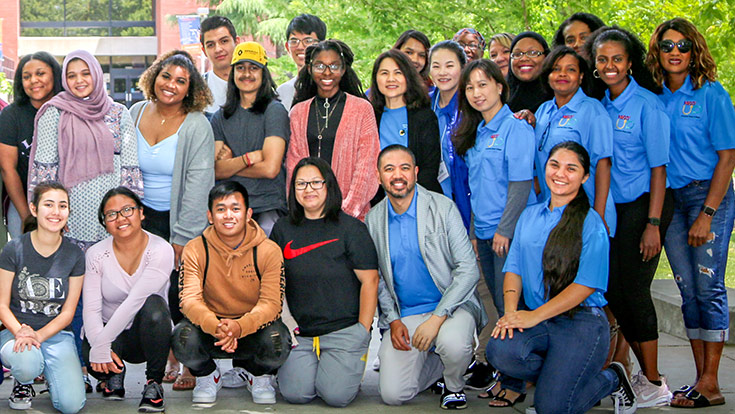
EOPS and CARE
EOPS and CARE extend the opportunity of attending higher education to those from educationally and economically disadvantaged backgrounds.
Mental Health Services
Learn about mental health services available to CRC students.

Disability Support Programs and Services (DSPS)
DSPS assists students with disabilities in achieving their full potential and becoming actively engaged in the campus community.
Immigration Legal Services
Free Immigration Legal Services through CHIRLA
Legal Consultations
The Coalition for Humane Immigrant Rights (CHIRLA), in collaboration with Los Rios Community College District, offers free virtual and in-person immigration consultations to Los Rios staff, faculty, and currently enrolled students. CHIRLA immigration services include:
- Immigration Relief Screenings
- DACA Renewals
- Advance Parole
- Naturalization/Citizenship
- Adjustment of Status
- Family-Based Immigration
- Know Your Rights
Our college offers both in-person and virtual consultations. To make an appointment with CHIRLA, visit Find Your Ally.
You are not required to state the nature of your case/question to a staff member to make an appointment with a legal representative.
Note: For in-person appointments, scheduling in advance is recommended. However, drop-ins are always welcome.
Local Legal Services and Support
- California Collaborative for Immigrant Justice
Email: info@ccijustice.org
1999 Harrison St Suite 1800
Oakland, CA 94612 - California Rural Legal Assistance Foundation
(916) 446-7901 or email: info@crlaf.org
2210 K St #201, Sacramento, CA 95816 - Catholic Charities of California
(916) 706-1539
1107 9th Street #707, Sacramento, CA 95814 - Center for Workers Rights
(916) 905-5857 or email: daniela.urban@rightscenter.org
2741 Fruitridge Road, Sacramento, CA 95820 - McGeorge School of Law Immigration Clinic
(916) 739-7191 or email: bnordahl@pacific.edu
2925 34th Street, Sacramento, CA 95817 - Mexican Consulate of Sacramento
(916) 329-3500 or email: sacramento@sre.gob.mx
2093 Arena Boulevard, Sacramento, CA 95834 - Opening Doors
(916) 492-2591 ext. 238 or email: gina@openingdoorsinc.org
1111 Howe Avenue #125, Sacramento, CA 95825 - Sacramento Food Bank & Family Services
(916) 456-1980 or email: communications@sacramentofoodbank.org
1951 Bell Avenue, Sacramento, CA 95838 - Sacramento FUEL Network
(916) 234-3734 or email: info@sacfuelnetwork.org - UC Davis Legal Immigration Clinic
(530) 752-7996 or email: krocha@ucdavis.edu
One Shields Avenue, Building TB30, Davis, CA 95616 - World Relief Sacramento
(916) 978-2650 or email: klewis@wr.org
2233 Watt Avenue Ste. 110, Sacramento, CA 95825
National Legal Services and Support Organizations
- Amnesty International
- California Community Colleges Chancellor's Office – Resources for Undocumented Students
- California Immigrant Policy Center – Call (916) 448-6762 or email info@caimmigrant.org.
- Coalition for Humane Immigrant Rights (CHIRLA)
- Council on American Islamic Council Relations
- International Rescue Committee Sacramento – Call (916) 482-0120 or email NorthernCalifornia@rescue.org.
- Immigrant Legal Resource Center
- Immigrants Rising
- Jewish Community Relations Council
- Immigration Advocates Network
- Mexican American Legal Defense and Educational Fund
- My Undocumented Life
- National Immigration Law Center – Call (213) 639-3900 or email reply@nilc.org.
- United We Dream
Know Your Rights
- The ACLU website Know Your Rights: Discrimination Against Immigrants and Muslims provides information for individuals who may be stopped by police or other state agents (in multiple languages).
- The Immigrant Legal Resource Center document Know Your Rights & What Immigrant Families Should Know (PDF) provides general information on both rights and how families can prepare.
Report ICE Activity
Call Sacramento Rapid Response Network at (916) 382-0256 to report ICE activity.
The Rapid Response Hotline offers support in both English and Spanish. Please note that there may be only one dispatcher available at a time. If the line is busy, they may be assisting another caller.
Callers are asked to use the hotline only to report ICE activity in the area or to seek support for someone who has been detained within the past 24 hours in the following counties: Butte, Colusa, El Dorado, Nevada, Placer, Sacramento, Sutter, and Yolo.
For more information please visit the Sacramento FUEL Network webpage.
If you're an employee, learn how to respond if ICE or non-LRPD immigration or law enforcement arrives at your campus.
Entrepreneurship/Employment
California Identification and Licensing Laws
- Assembly Bill (AB 60) - AB 60 driver’s licenses (DL) are for individuals who are unable to provide proof of legal presence in the United States (U.S.), but who meet California DMV requirements and are able to provide proof of identity and California residency.
- Senate Bill (SB) 1159 - SB 1159, approved by Governor Brown in 2014, requires licensing boards within the Department of Consumer Affairs to accept an individual tax identification number in lieu of a social security number for professional licenses. The law enables all California students who qualify to sit for specific licensing exams and to become licensed upon passing the exams. The law also prohibits any entity within the department from denying licensure to an applicant based on his or her citizenship status or immigration status.
- Assembly Bill (AB) 2184 - AB 2184 is a California state law that requires local governments (cities/counties) to accept a California ID/driver's license or ITIN in the place of a SSN in issuing business licenses.
- Senate Bill (SB) 695 - SB 695 is a California state law enacted in September 2018 that prohibit licensing boards from requiring an individual to disclose either citizenship status or immigration status for purposes of licensure, or from denying licensure to an otherwise qualified and eligible individual based solely on his or her citizenship status or immigration.
- Assembly Bill (AB) 1024 - AB 1024 is an assembly bill enacted in October 2013 that authorizes the Supreme Court to admit an applicant as an attorney at law in all the courts of the state, upon certification of the State Bar of California.
- Senate Bill (SB) 788 - SB 788 is a senate bill enacted in February 2021 that prohibits consideration of race, religious creed, color, national origin, gender, marital status, sex, sexual identity, or sexual orientation to determine the approximate percentage of the permanent disability caused by other factors. The bill aims to eliminate bias and discrimination in the workers compensations system.
- Senate Bill (SB) 1139 - SB 1139 is a senate bill enacted in September 2016 that prohibits specified programs administered by any public or private postsecondary educational institution that offers such a program from denying an application based on the citizenship status or immigration status of the applicant.
Professional Licenses for Undocumented Students
- Accounting
- Architecture
- Audiology
- Barbering and Cosmetology
- Clinical Psychology
- Counseling, Marriage and Family Therapy
- Dentistry
- Dental Hygiene
- Engineering
- Funerary Services
- Law
- Medicine
- Nursing
- Occupational Therapy
- Optometry
- Pharmacy
- Physical Therapy
- Radiology Technician
- Teaching
- Veterinary Medicine
California Department of Justice (DOJ) Background Checks
Undocumented students can complete a California DOJ Background Check for professional opportunities, including volunteering, internships, fellowships, and licensure requirements.
The Foundation for California Community Colleges, Immigrants Rising, and the University of California Immigrant Legal Services Center created an FAQ to learn more: Frequently Asked Questions: California Department of Justice (DOJ) Background Checks and Undocumented Students in California Higher Education.
Disclaimer: This document does not aim to provide legal advice or recommendations. This document is intended to support students in making informed decisions based on publicly available information. This is a working document and may be adapted and updated as laws change, and additional information is gathered.
General Resources and Support Services
Local Resources and Support Services
- Asian Resources, Inc. – Call (916) 454-1892 or email info@asianresources.org.
- California Family Resource Center – Call (916) 993-7781 or email info@frcnca.org.
- La Familia Counseling Center – Call (916) 452-3601 or email info@crlaf.org.
- Latino Coalition for a Healthy California – Call (916) 448-3234 or email lchc@lchc.org.
- NorCal Resist – Call (916) 382-0256 or email norcalresist@gmail.com.
- Sacramento Covered – Call (916) 414-8333.
Local Four-Year UndocuCenters
Scholarships for Undocumented Students
The following websites provide information on scholarships open to undocumented students.
- Los Rios Foundation Scholarship Opportunities
- The DREAM.US
- My Undocumented Life – Scholarships
- MALDEF Scholarship Resources
- Immigrants Rising – Scholarships
This is a helpful tool to help students find scholarships that do not require proof of citizenship. Criteria can vary, but the common denominator is that a social security number and proof of citizenship or legal residency is not required to apply or receive the scholarship
Medical Resources
Mental Health Resources
Housing and Food Resources
Privacy
California Privacy and Educational Equity Laws
- Family Educational Rights and Privacy Act (FERPA) - FERPA is a federal law that prohibits schools from disclosing personally identifiable information in a student’s “education records” to a third party without the consent of the student (or parent, if the student is under 18 years old).
- SB 183 - This law extends existing protection regarding equal rights and opportunities in postsecondary educational institutions in California from being subjected to discrimination on those bases of immigration status.
- SB 54 - The California Values Act (SB 54) declares that immigrants are valuable and essential members of the California community. This law ensures that no state and local resources are used to assist federal immigration enforcement and that our schools and colleges are safe spaces for everyone in our community.
| Subject | Privacy Information |
|---|---|
| CRC Policy | Cosumnes River College will not release any personally identifiable student information, including any data related to immigration status, without a judicial warrant, subpoena or court order, unless authorized by the student or required by law. |
| College Eligibility | The CCCs, CSUs & UCs are open to all students who meet the minimum requirements for admission, regardless of immigration status. |
| Financial Aid Benefits | Students can be confident that based on federal and state law, any information they submit on their college admission and/or financial aid applications will not put themselves or their families at risk. |
| Restricting Data Access | Directory information, which includes name, dates of attendance, and other factors can be considered public information. Students may request that the college restrict access to their directory information by contacting the Admissions and Records Office |